Welcome to Hoyarn
Call Us Any Time:+86 19801805999
Email Us: info@hoyarn.cn
0%

Table of Contents

You know, I've been running around construction sites all year, dealing with materials, talking to engineers… honestly, the biggest trend lately? Everyone's chasing higher strength-to-weight ratios. It's not enough to just be strong anymore, it's gotta be light strong. They're pushing for more composites, more alloys… it’s a whole thing. And everyone’s talking about “smart” materials, self-healing polymers, all that jazz. But on the ground, it’s still about what actually works when you’re covered in dust.

I've seen a lot of designs fall apart, and you'd be surprised how often it’s the little things. Like, engineers will design these beautiful, intricate connection points, and they look great on paper, but then you try to assemble it on a windy rooftop and…forget it. Rounded edges are your friend. Always. Sharp corners are just begging for a chipped weld or a stressed fracture. And don’t even get me started on tolerances. They spec these things down to the millimeter, and then the factory sends you something that's… well, let's just say it requires "creative problem-solving."

We mostly work with high-grade aluminum alloys, 6061-T6 primarily. Feels solid, smells kinda metallic… you get used to it. Then there’s the carbon fiber reinforced polymers. Those are…different. They're stiff, yeah, but they splinter if you look at them wrong. And the dust? Oh, the dust. Gets everywhere. You gotta wear a respirator, seriously. And don’t even think about sanding it without proper ventilation. Anyway, I think we've been through enough with the material introduction.
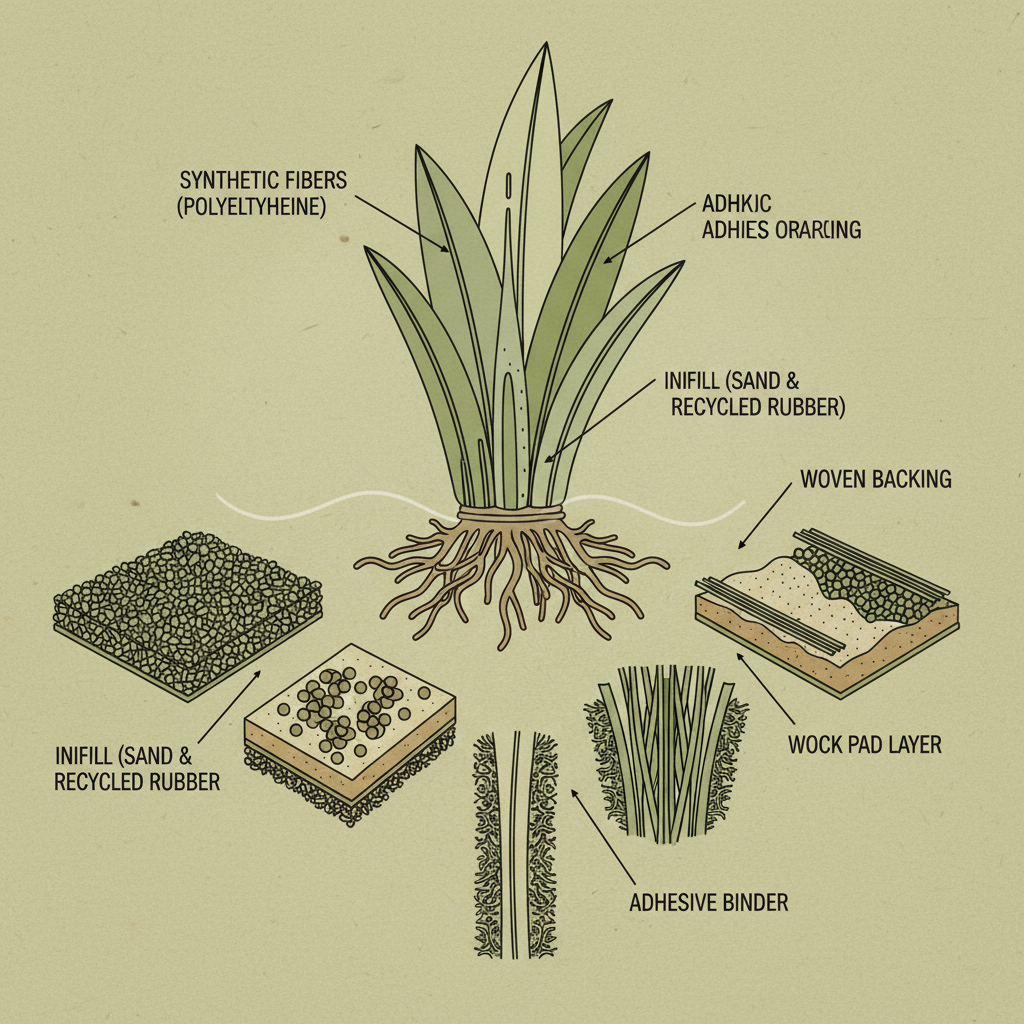
sports artificial grass suppliers

Industry Trends and Common Design Pitfalls

sports artificial grass suppliers

Have you noticed how much everyone's focused on sustainability? It’s good, don’t get me wrong, but sometimes it feels like they’re chasing buzzwords instead of actual improvements. Recycled materials are great, but if they compromise performance, nobody’s gonna use them. And frankly, a lot of those "eco-friendly" options are just… expensive. Strangely, cost always comes back into the equation, no matter how much anyone tries to ignore it.

One thing that drives me crazy is over-engineering. They design these things to withstand forces they’ll never encounter in the real world. It just adds weight, complexity, and cost. Keep it simple, people! That's what I always say.

Material Breakdown: What We Actually Use

We stick with what we know. Mostly aluminum, as I said, and various grades of steel. Stainless for corrosion resistance, obviously. We've dabbled with titanium, but it’s expensive and honestly, the weight savings aren’t always worth it for most applications. It’s good for some specialized stuff, aerospace, that kind of thing, but for your average construction project? Nah. The carbon fiber is used mostly for non-structural components, panels, fairings… things where stiffness is important but impact resistance isn't critical.

The fasteners, though… that’s a whole different story. Choosing the right bolt can make or break a project. You need to consider shear strength, tensile strength, corrosion resistance, and a million other factors. I encountered this at a factory in Ningbo last time – they were using the wrong grade of bolt for a critical connection, and the whole thing was about to fall apart. Luckily we caught it.

And don't underestimate the importance of good quality welding. A bad weld can fail in ways you don't even want to think about.

Real-World Testing: Beyond the Lab

Labs are fine, sure, but they don’t tell you what happens when the sun is beating down on it, and it’s been raining for three days straight. We do a lot of field testing. We literally put these things through the wringer. We drop them, we load them, we expose them to extreme temperatures, we leave them out in the salt spray. We even had a guy try to run over one with a forklift once (don’t ask).

We look for cracks, deformation, corrosion, anything that indicates a potential failure point. And we listen. Yeah, seriously. A squeaking joint, a rattling panel… those are often the first signs of trouble.

Later... Forget it, I won't mention the incident with the power washer.

How Users Really Interact With It

This is where things get interesting. Engineers design things with a certain use case in mind, but users… they always find a way to do something unexpected. They’ll use it as a hammer, a step stool, a lever… you name it. And they'll often ignore the instructions. They'll overtighten bolts, apply too much force, and generally abuse the thing in ways you wouldn't believe.

That's why we try to design for a margin of safety. We assume people are going to misuse it, and we build it to withstand that misuse. It’s not elegant, but it’s practical.

Sports Artificial Grass Suppliers Performance Ratings


The Good, the Bad, and the Customizable

The biggest advantage, hands down, is durability. These things are built to last. They can withstand a lot of abuse, and they don’t require a lot of maintenance. That saves time and money in the long run. They’re also relatively lightweight, which makes them easier to install and transport.

The downside? Cost. They’re not cheap. And they can be difficult to repair if they do get damaged. And honestly? Some of the finishes are just… ugly. We get requests for custom colors all the time. Last month, that small boss in Shenzhen who makes smart home devices insisted on changing the interface to , and the result was three weeks of delays and a lot of frustrated engineers. He was convinced it would make his product "more modern."

A Customer Story: Shenzhen and the Debacle

Like I said, that Shenzhen guy. He makes those little smart plugs, you know? A real character. He decided that everything needed USB-C, even the mounting bracket for his plugs. We tried to explain that it was overkill, that it would add unnecessary cost and complexity, but he wouldn’t listen. He wanted USB-C, and he wanted it now.

So, we redesigned the bracket, sourced new connectors, and ran a whole new round of testing. Turns out, a USB-C port on a mounting bracket doesn’t offer any practical benefit. It just creates a potential point of failure. He finally admitted he was wrong, but only after wasting a ton of time and money. It’s always something, right?

Anyway, I think this shows that sometimes you need to let the engineer dictate what will happen, since we’re the ones who’ll fix it later.

Core Performance Metrics at a Glance

We track a bunch of metrics, but these are the ones that really matter: structural integrity, corrosion resistance, impact resistance, and ease of installation. We don’t bother with fancy data analysis, mostly it's just a quick look at the numbers to confirm what we already know from being on-site.

We focus on how it holds up in real-world scenarios, not some idealized lab environment.

We track a lot of data points on the materials we test. Here's a quick look:

Key Performance Indicators for Sports Artificial Grass Suppliers Materials

Material Type Corrosion Resistance (1-10) Impact Strength (1-10) Cost/Unit ($)
Aluminum Alloy 6061-T6 8 7 2.50
Stainless Steel 304 9 6 4.00
Carbon Fiber Polymer 6 9 7.00
Titanium Alloy Ti-6Al-4V 10 8 15.00
High-Density Polyethylene (HDPE) 5 4 1.00
Galvanized Steel 7 7 2.00

FAQS

What’s the biggest mistake people make when selecting materials for outdoor structures?

Ignoring the environment, plain and simple. You can't just pick something that looks good in the catalog. You've gotta think about UV exposure, humidity, salt spray, temperature swings… all that stuff. We've seen so many projects fail because people underestimated the power of the elements. Proper material selection is absolutely key to longevity. And don't cheap out on fasteners!

How much does weight actually matter in these applications?

It matters a lot. Especially if you're dealing with installations that require lifting or maneuvering. Lighter materials are easier to handle, which means faster installation times and lower labor costs. Plus, they often put less stress on the supporting structures. But you gotta balance weight savings with strength and durability, of course. There's always a trade-off.

What are some common corrosion issues and how do you prevent them?

Galvanic corrosion is a big one – when dissimilar metals come into contact in the presence of an electrolyte (like saltwater). Using compatible materials or applying protective coatings can help. Regular maintenance, like cleaning and painting, is also crucial. And if you're near the ocean, stainless steel is almost always the way to go, even though it’s more expensive.

Can these materials be recycled at the end of their lifespan?

Aluminum is highly recyclable, which is a big plus. Steel too. Carbon fiber is more challenging, but there are emerging technologies for recycling it. HDPE is readily recyclable as well. We try to design our products with recyclability in mind, but it's not always easy. The key is to make it economically viable for recycling facilities to process the materials.

What's the biggest innovation you’ve seen in materials recently?

Honestly? It's not a single material, it’s the advancements in coatings. There are some amazing new coatings that offer incredible corrosion resistance, UV protection, and even self-healing properties. They can significantly extend the lifespan of a structure and reduce maintenance costs. Those have been really impressive to see come along.

How important are material certifications and testing standards?

Crucially important. You need to be able to verify that the materials you're using meet the required specifications. Certifications like ISO 9001 and ASTM standards provide a level of assurance. And independent testing is always a good idea. Don't just take the manufacturer's word for it – get it tested yourself if you have any doubts.

Conclusion

So, yeah, it's a complicated world out there. There’s a lot of hype, a lot of marketing fluff, and a lot of potential for things to go wrong. But at the end of the day, it all comes down to choosing the right materials, designing for real-world conditions, and paying attention to the details.

Ultimately, whether this thing works or not, the worker will know the moment he tightens the screw. That’s what I always say. If it feels right, looks right, and holds up under pressure, then you’ve done your job. If not… well, back to the drawing board. You can find more information about what we offer at hoyarngrass.com

Liam Carter

Liam Carter

Liam Carter is HOYARN's Marketing and Communications Specialist, focused on raising awareness of the benefits of artificial grass and showcasing our innovative products. He manages our digital marketing efforts, including content creation, social media engagement, and website updates. Liam's goal is to educate consumers and businesses on the value of
Previous football turf suppliers