Finding the artificial grass lowest price often involves a complex balance between upfront cost and long-term durability. While budget-friendly options are available, the true value lies in selecting a synthetic turf that reduces maintenance expenses and replacement frequency over time. Understanding the pricing drivers helps procurement teams make informed decisions without compromising on quality.
Many commercial and residential users face the dilemma of choosing between low-cost imports and premium engineered solutions. The risk of purchasing inferior materials often results in flattened grass blades and poor drainage, leading to higher operational costs. This challenge is particularly acute in high-traffic areas like school playgrounds and amusement parks.
This guide analyzes how to secure the most competitive pricing for high-performance artificial grass while maintaining essential technical standards. We will explore material compositions, application-specific selection criteria, and the cost-benefit analysis of advanced designs like M-shaped filaments to help you optimize your investment.

1Understanding Artificial Grass Pricing Factors

The cost of synthetic turf is primarily driven by the raw materials used, such as Polypropylene (PP) and Polyethylene (PE). The density of the stitches and the height of the pile significantly impact the final price. Lower-cost options typically use fewer stitches per square meter or lower-grade polymers that may degrade faster under UV exposure.
Manufacturing processes also play a role. Advanced extrusion techniques that create realistic, multi-tonal grass blades are more expensive than single-color, flat designs. However, the integration of specialized shapes, such as M-shaped filaments, provides a better return on investment by increasing resilience.
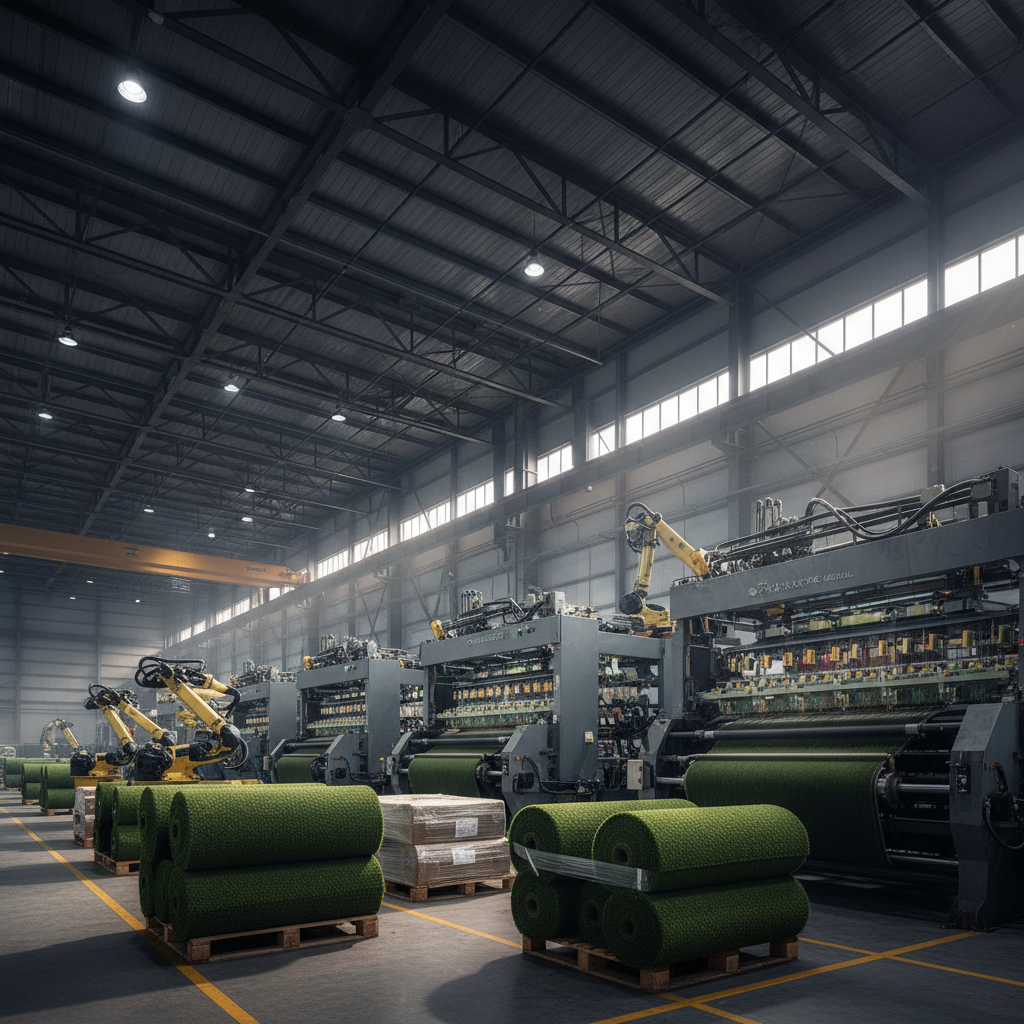
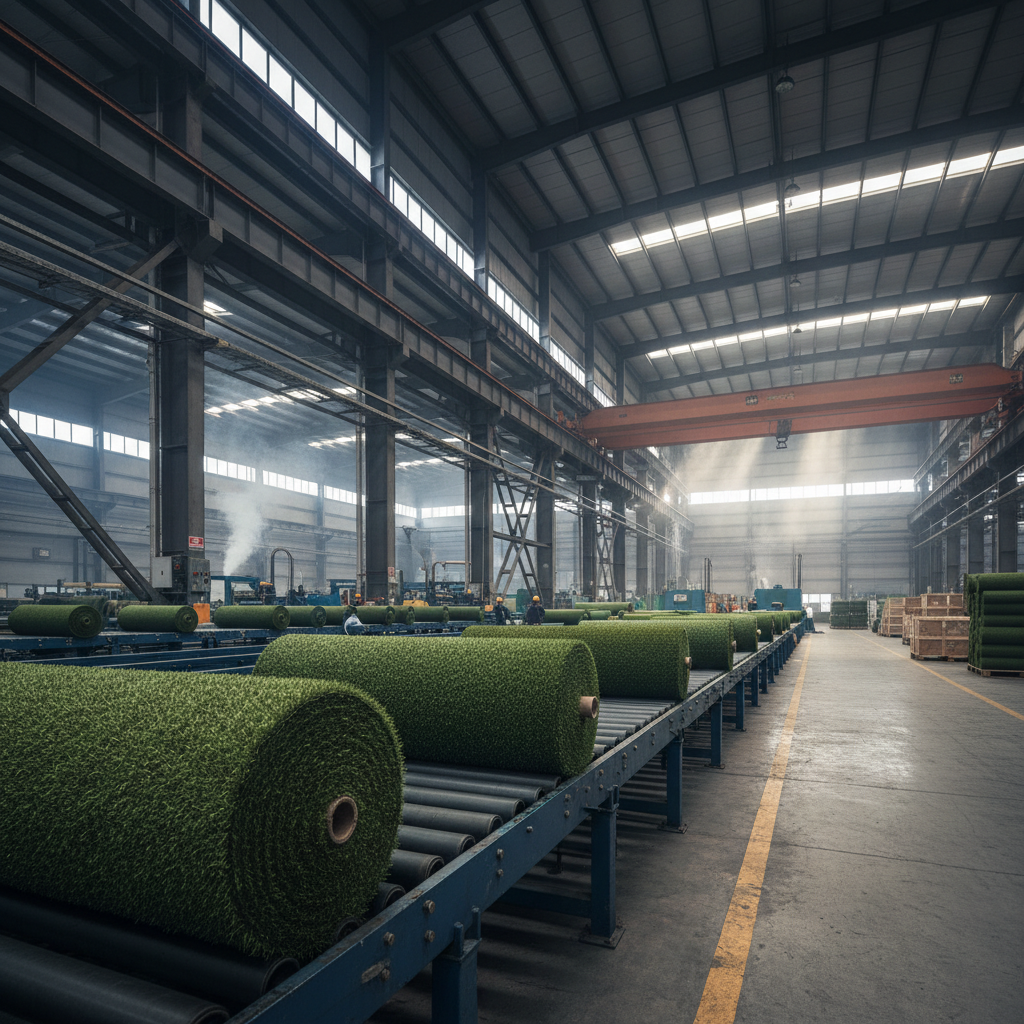
Logistics and volume purchasing are the most effective ways to lower the unit price. Ordering in bulk directly from manufacturers like HOYARN allows buyers to bypass middleman markups, significantly reducing the overall project cost for large-scale installations.
2Core Technical Features of Cost-Effective Turf
To achieve the artificial grass lowest price without losing quality, focus on the filament architecture. High-performance PE and PP materials ensure that the turf remains soft yet durable. The design of the blade is crucial; M-shaped designs are particularly effective as they create a more three-dimensional surface that resists flattening.
Resilience is another key technical factor. Turf designed for high-traffic areas must have a strong backing layer and high-elasticity blades. This prevents the turf from becoming a "mat" over time, extending the replacement cycle and reducing the long-term cost of ownership.
Water permeability is often overlooked in budget selections. Effective drainage systems integrated into the backing prevent pooling and mold growth, which is critical for outdoor sports fields and pet areas, ensuring the longevity of the installation.
3Application Scenarios and Selection Logic
Different environments require different turf specifications, which in turn affects the price. For school playgrounds, the priority is safety and impact absorption. Using a turf with good elasticity can reduce the risk of injury for students, making it a high-value choice regardless of the initial price.
In amusement parks and entertainment venues, the focus shifts to aesthetics and comfort. Here, a denser, more realistic look is required to enhance the visitor experience. M-shaped grass is ideal for these settings as it maintains its uprightness even under frequent trampling.
Pet training areas require specifically engineered turf with high drainage and antimicrobial properties. While these might carry a slightly higher price point than standard landscaping turf, they prevent odors and hygiene issues, providing better overall value for the user.
4Performance Metrics and Comparative Analysis
Comparing the artificial grass lowest price against performance requires looking at a set of key metrics: UV stability, recovery rate, and abrasion resistance. Premium low-cost solutions often outperform generic alternatives by utilizing better polymer blends that resist the harsh effects of sunlight.
The recovery rate—how quickly the grass returns to its original position after being stepped on—is a primary indicator of quality. M-shaped filaments typically show a significantly higher recovery rate compared to standard C-shaped or flat filaments.
artificial grass lowest price Performance Metrics
When evaluating these metrics, it is important to consider the "Total Cost of Ownership." A cheaper product that needs replacement every 3 years is far more expensive than a mid-range product that lasts 8 years. This logic should drive all procurement decisions.
5Procurement Best Practices for Lowest Costs
To secure the artificial grass lowest price, buyers should focus on direct factory sourcing. This eliminates several layers of distribution margins. Evaluating the manufacturer's capacity and material sourcing allows for better negotiation and quality assurance.
Standardizing the specifications across a project can also reduce costs. By using the same turf type for multiple areas—where appropriate—you can increase the order volume per SKU, which often triggers deeper discounts from the supplier.
Timing the purchase can also be beneficial. Ordering during off-peak seasons for synthetic turf production can sometimes lead to better pricing agreements as factories seek to maintain consistent production levels throughout the year.
6Industry Trends in Synthetic Fiber Innovation
The industry is moving toward more sustainable polymers and recyclable materials. The development of hybrid fibers that combine the softness of PE with the strength of PP is allowing manufacturers to offer lower prices while improving the overall lifespan of the product.
Another major trend is the optimization of the "M-shape" geometry. By refining the bend of the filament, engineers are creating turf that is even more resilient to high-traffic compression, which is a critical requirement for commercial sports and entertainment venues.
Digital customization is also becoming more common, allowing buyers to specify exact density and height requirements. This "precision ordering" ensures that you aren't paying for features you don't need, effectively lowering the cost per project.
7Comparative Selection Guide for Different Budgets
Choosing the right turf depends on the specific budget and the expected load of the installation. For those seeking the absolute artificial grass lowest price, landscaping turf with lower density is the best fit, provided it is used in low-traffic areas.
For commercial applications, the "Value" tier is often the best choice, offering a balance of M-shaped resilience and competitive pricing. This ensures the field remains flat and attractive even after years of heavy use.
| Turf Grade | Best Use Case | Key Strength | Durability Level |
|---|---|---|---|
| Budget Eco | Residential/Decorative | Lowest Upfront Cost | Low-Medium |
| Standard PE | Home Lawns/Patios | Good Aesthetics | Medium |
| M-Shape Value | Playgrounds/Parks | High Resilience | High |
| Pro-Sports | Competitive Fields | Maximum Durability | Extreme |
| Pet Special | Kennels/Training | High Drainage | Medium-High |
| Indoor Home | Interior Decor | Extreme Softness | Medium |
Ultimately, the most economical choice is the one that minimizes the need for maintenance and early replacement. Investing in a product with proven elasticity and high-quality PP/PE materials is the most sustainable way to manage costs.
Frequently Asked Questions
Conclusion
Securing the artificial grass lowest price requires a strategic approach that looks beyond the initial purchase tag. By focusing on material quality, such as the use of high-performance PP and PE, and advanced designs like M-shaped filaments, buyers can achieve a balance of affordability and long-term durability.
Whether for a school playground or a commercial entertainment center, the goal is to maximize the lifespan of the installation. For those evaluating the most cost-effective and durable solutions, detailed product information and pricing can be reviewed at www.hoyarngrass.com.