Artificial turf around pool areas has emerged as a popular and practical landscaping solution for homeowners and commercial properties alike. It offers a compelling alternative to traditional materials, providing a durable, low-maintenance, and aesthetically pleasing surface that enhances the poolside experience. The increasing demand for artificial turf stems from its ability to address common issues associated with natural grass, such as wear and tear from foot traffic, the need for constant watering, and the expense of regular maintenance.
The global artificial turf market is experiencing substantial growth, driven by factors such as water scarcity, rising labor costs, and an increasing emphasis on sustainable landscaping practices. According to recent industry reports, the market is projected to reach significant value in the coming years, indicating a strong and sustained demand. This growth is particularly pronounced in regions with arid climates or where water conservation is a priority.
Beyond aesthetics, artificial turf around pools offers safety benefits, reducing the risk of slips and falls with its consistent surface and cushioning properties. It’s also a practical choice for families with children and pets, providing a clean and hygienic play area. The use of artificial turf around pool areas is transforming outdoor spaces and redefining the poolside experience.
The increasing preference for artificial turf around pool areas is driven by its aesthetic appeal and ease of maintenance. Traditional pool decking materials like concrete and wood often require significant upkeep, including sealing, staining, and repairs. Artificial turf eliminates these concerns, offering a consistently vibrant and inviting space with minimal effort.
Homeowners are increasingly seeking low-maintenance landscaping solutions to maximize their leisure time. Artificial turf perfectly addresses this need, allowing pool owners to spend less time on yard work and more time enjoying their outdoor oasis. Its durability and resistance to wear and tear make it an ideal choice for high-traffic areas around the pool, ensuring a long-lasting and attractive finish.
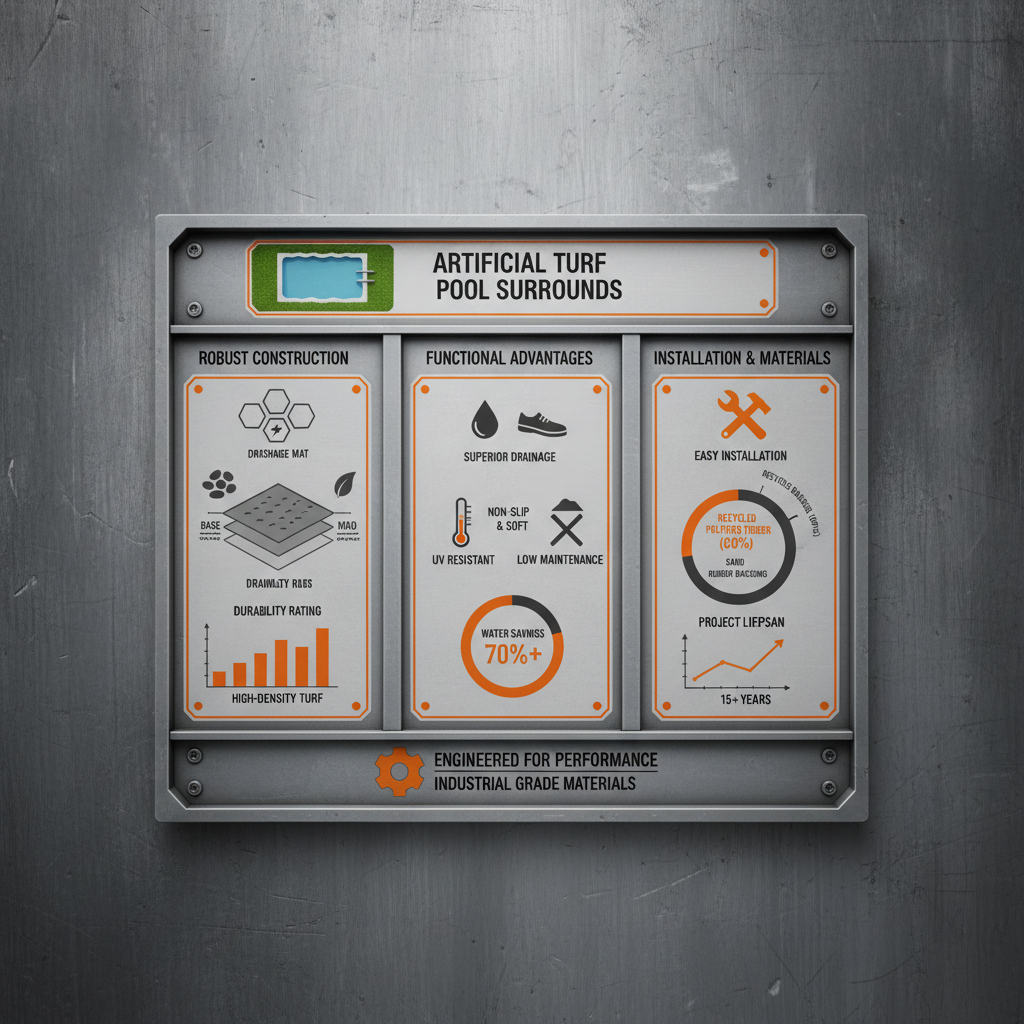
High-quality artificial turf designed for pool areas is specifically engineered to resist the corrosive effects of chlorine. The fibers are typically made from materials like polyethylene and polypropylene, which are inherently chlorine-resistant. However, it’s important to rinse the turf regularly to remove chlorine residue and prevent potential discoloration over time. Properly installed and maintained, pool-specific turf can withstand years of chlorine exposure.
Excellent drainage is crucial to prevent waterlogging and ensure the longevity of your artificial turf. A properly prepared sub-base is essential, typically consisting of a layer of compacted gravel or crushed stone. Beneath the turf, a perforated drainage membrane or geotextile fabric should be installed to allow water to flow freely away from the pool area. This prevents standing water, mold growth, and maintains a safe, slip-resistant surface.
With proper installation and maintenance, artificial turf around a pool can last for 15-20 years or even longer. The lifespan depends on several factors, including the quality of the turf, the amount of foot traffic, the level of sun exposure, and the frequency of cleaning. Regular brushing, rinsing, and occasional infill replenishment can help extend the life of your artificial turf.
Artificial turf can get warmer than natural grass in direct sunlight, but there are ways to mitigate this. Choosing a turf with a lighter color can reflect more sunlight, keeping the surface cooler. Additionally, regularly spraying the turf with water can provide a cooling effect. Newer turf technologies also incorporate cooling fibers that help reduce surface temperatures.
Artificial turf requires minimal maintenance compared to natural grass. Regular brushing to keep the fibers upright and rinsing to remove debris and chlorine residue are recommended. Occasionally, you may need to replenish the infill material to maintain cushioning and support. Avoid using harsh chemicals or abrasive cleaners, as they can damage the turf fibers.
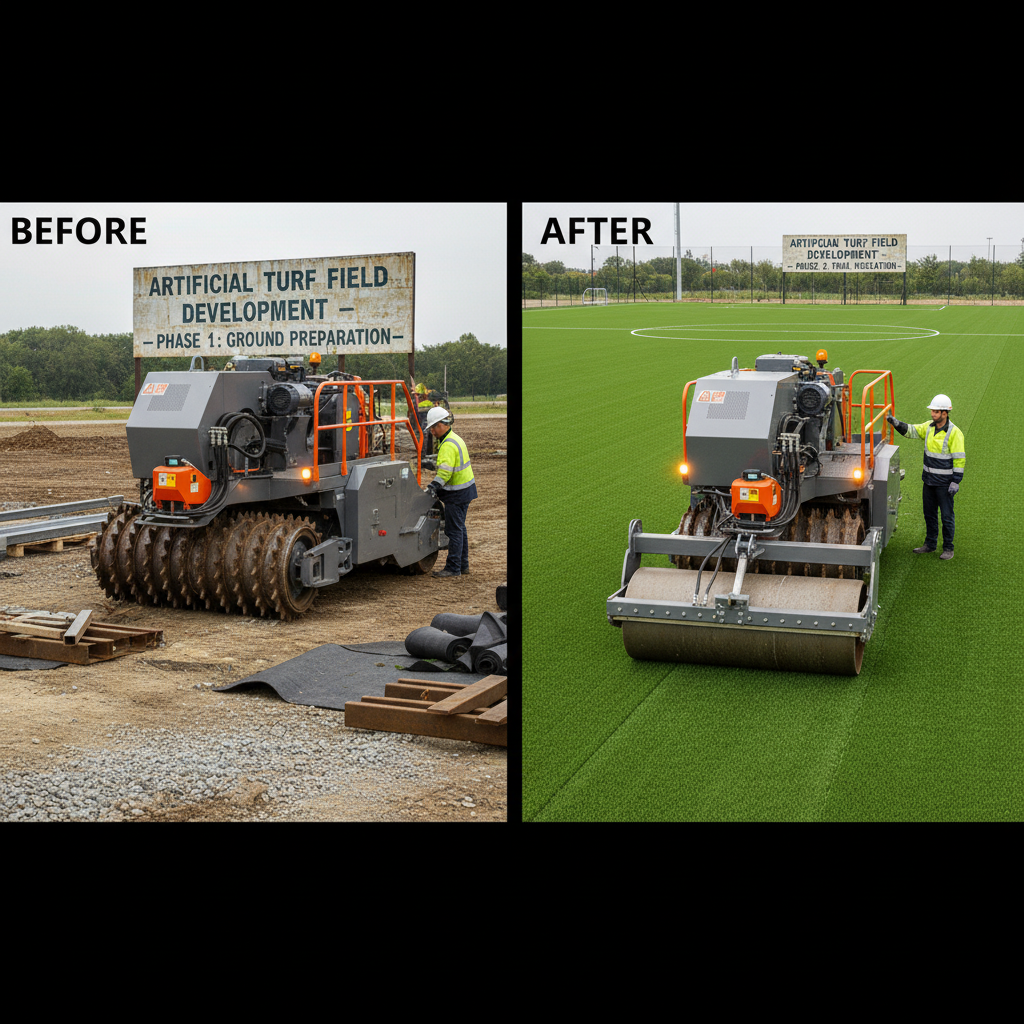
Installation typically involves preparing the sub-base, laying a weed barrier fabric, installing the turf, and applying infill. The cost varies based on the size of the area, the type of turf selected, and labor costs. On average, installation can range from $7 to $15 per square foot. It’s best to obtain quotes from qualified installers to get an accurate estimate.
In conclusion, artificial turf offers a compelling solution for creating beautiful, functional, and low-maintenance pool areas. Its durability, aesthetic appeal, and environmental benefits make it an increasingly popular choice for homeowners and commercial properties. By addressing common issues associated with natural grass, such as water consumption, maintenance requirements, and wear and tear, artificial turf around pool provides a long-lasting and cost-effective investment.
As technology continues to advance, we can expect to see even more innovative and sustainable artificial turf solutions emerge. Exploring the options available and choosing a high-quality product installed by a reputable professional will ensure a poolside oasis that you can enjoy for years to come. Visit our website today at www.hoyarngrass.com to learn more!