Welcome to Hoyarn
Call Us Any Time:+86 19801805999
Email Us: info@hoyarn.cn
Professional Sports Turf Guide and Artificial Grass Price
Investing in high-performance turf for professional sports venues requires a strategic balance between initial expenditure and long-term operational efficiency. For stadium managers and leisure venue owners, the primary challenge is securing a surface that maintains peak athletic performance under high-intensity play without the recurring costs of traditional infill materials. Modern advancements in polyethylene and polypropylene synthetic fibers have led to the rise of no-fill sports grass, a solution that eliminates the need for rubber granules or sand, thereby reducing environmental impact and athlete health risks.
By analyzing the total cost of ownership, it becomes clear that professional-grade synthetic surfaces provide superior value through minimized maintenance cycles and extended lifespans. Whether optimizing a football stadium or a multi-purpose leisure center, selecting a turf based on density, resilience, and drainage capabilities ensures a realistic playing experience while stabilizing the annual budget. This guide examines the technical drivers behind professional turf selection and how these factors influence the artificial grass price for large-scale installations.

The Technical Evolution of No-Fill Synthetic Turf for High-Intensity Athletics
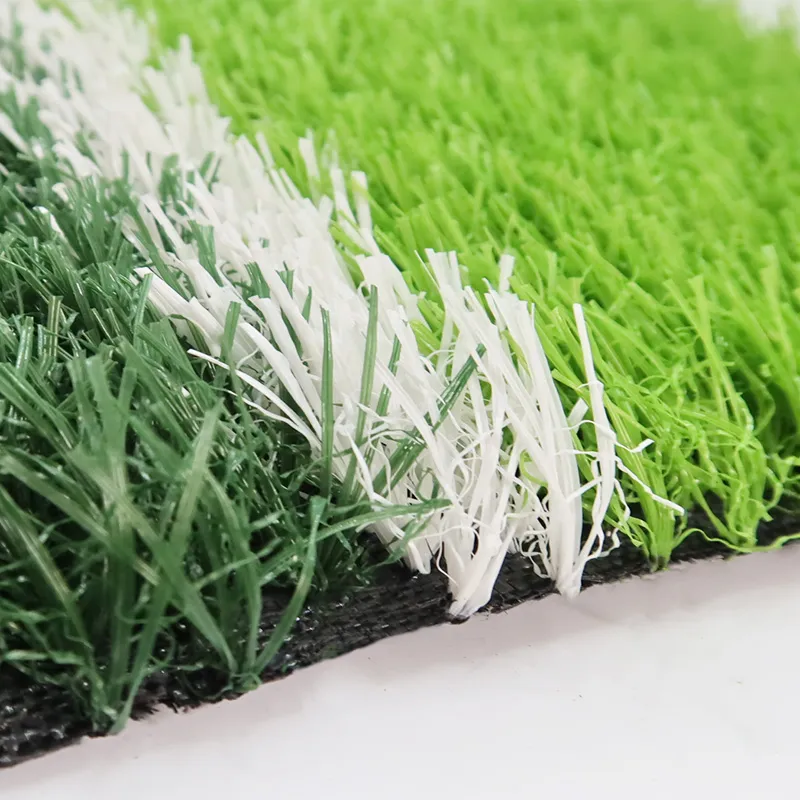
Traditional artificial turf often relies on heavy infills to provide cushioning and stability. However, the transition toward no-fill sports grass represents a significant shift in sports engineering. These systems utilize high-density polyethylene (PE) or polypropylene (PP) filaments, engineered with specific cross-sectional shapes to provide inherent resilience. This structural integrity allows the grass to stand upright even after prolonged use, ensuring consistent ball roll and player traction without the need for external support materials.
From a manufacturing perspective, the integration of advanced weaving processes ensures that the fibers are securely anchored to a robust backing. This not only enhances the durability of the field but also simplifies the installation process. Because these systems often use integrated manufacturing, on-site splicing is minimized, which accelerates project timelines and reduces labor costs during the initial rollout of a sports facility.
- Material Composition: Premium polyethylene for softness and durability, or polypropylene for enhanced stiffness.
- Structural Resilience: High-density filaments that mimic natural grass recovery.
- Environmental Safety: Elimination of rubber particles reduces chemical emissions and inhalation risks for athletes.

Operational Advantages: Reducing Maintenance and Environmental Footprint
One of the most compelling reasons for adopting no-fill turf is the drastic reduction in long-term maintenance. Traditional infill fields require periodic "topping up" of rubber or sand, as these materials migrate or degrade over time. By removing the infill variable, facility managers eliminate the costs associated with sourcing, transporting, and spreading fill materials, as well as the labor required for grooming the surface.
Furthermore, the drainage performance of professional no-fill grass is superior. The unique structural design allows rainwater to permeate the surface and exit the field quickly, preventing pooling and waterlogging. This means that sports schedules are rarely interrupted by weather events, as the field can be restored for use almost immediately after heavy rainfall, maximizing the revenue-generating potential of the venue.
Cleaning is similarly streamlined. Instead of complex vacuuming or brushing systems needed for filled turf, no-fill surfaces typically only require simple rinsing with water to remove debris, significantly lowering the human and material resources required for daily upkeep.
Matching Turf Specifications to Professional Sports Requirements
Selecting the right synthetic surface requires a deep understanding of the specific sport's demands. For football and soccer, the focus is on shock absorption and ball behavior. The density of the fibers must be sufficient to provide cushioning, which reduces the risk of sports injuries by absorbing impact energy during tackles or falls. A high-quality fiber ensures that the "feel" of the game remains natural, providing athletes with a predictable surface.
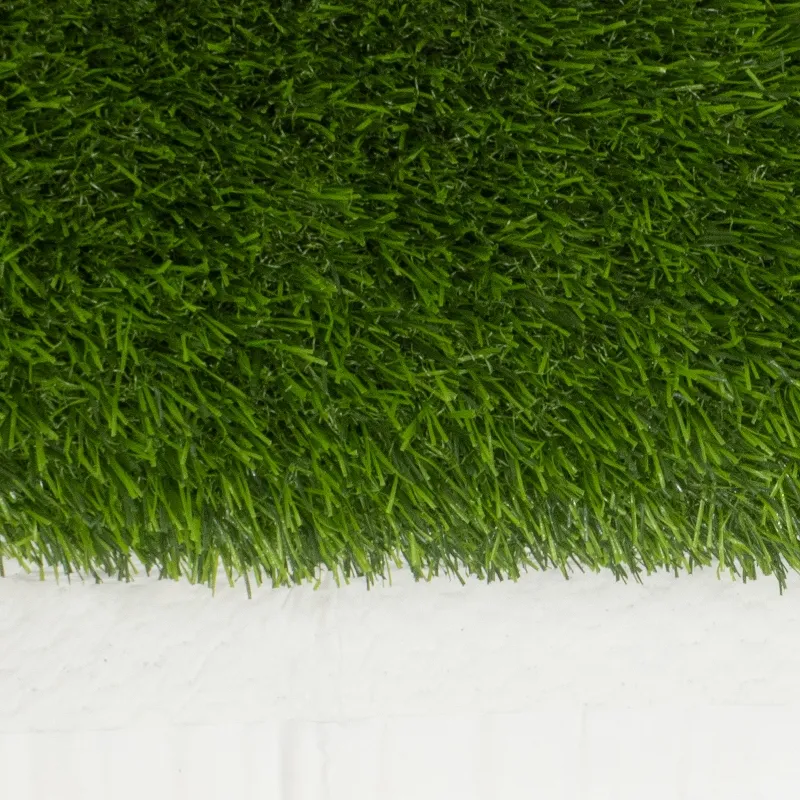
For leisure venues and multi-purpose areas, the priority often shifts toward aesthetic longevity and versatility. Vibrant, UV-stabilized colors ensure the field looks professional year-round, enhancing the visual appeal for spectators and broadcasters. The longevity of the product is tied directly to the quality of the raw polymers used; higher-grade plastics resist degradation from sunlight and friction, extending the replacement cycle of the entire field.
When evaluating options, buyers should consider the balance between fiber height and density. A denser turf provides better support but may require different drainage considerations, while a softer pile is often preferred for specific training areas or indoor decor applications where comfort is prioritized over extreme durability.
Comparative Analysis of Professional Turf Configurations
| Performance Metric | No-Fill Sports Turf | Traditional Infill Turf | Natural Grass |
|---|---|---|---|
| Maintenance Effort | Low (Rinsing Only) | Medium (Grooming/Filling) | High (Mowing/Watering) |
| Installation Speed | Fast (Integrated) | Moderate (Layered) | Slow (Growth Period) |
| Weather Resilience | High (Quick Drain) | Medium (Possible Pooling) | Low (Mud/Dormancy) |
| Environmental Risk | Minimal | Rubber Particle Leaching | Pesticide/Fertilizer Use |
| Surface Consistency | Uniform/Permanent | Variable (Fill Shift) | Seasonal Variation |
Strategic Procurement: Evaluating Quality and Supplier Capability
Procuring synthetic turf for a professional project is not merely about finding the lowest quote, but about evaluating the manufacturer's ability to deliver consistent quality. A reliable supplier like HOYARN focuses on the synergy between material science and application needs, ensuring that the turf is tailored to the specific intensity of the intended sport. Buyers should investigate the manufacturing process—specifically how fibers are bonded to the backing—to ensure the turf won't shed under high-shear forces.
Customization is another critical factor. Whether the project requires a specific shade of green for branding or a particular density for a specialized training zone, the ability of the manufacturer to provide OEM/ODM services can be a decisive advantage. Understanding the technical limits of the material helps in setting realistic expectations for the field's lifespan and performance benchmarks.
Finally, consider the logistics of the installation. A supplier that offers a streamlined, integrated manufacturing process can significantly reduce the risk of on-site splicing errors, which often lead to visible seams and potential trip hazards. Professional procurement involves weighing these technical advantages against the initial investment to ensure a sustainable, high-performing asset.
Future Trends in Synthetic Turf and Sustainable Infrastructure
The trend in professional sports infrastructure is moving decisively toward "green" synthetic solutions. The shift away from crumb rubber infills is driven by both environmental regulations and health concerns. Future developments are likely to focus on bio-based polymers and fully recyclable synthetic fibers, further reducing the ecological footprint of sports stadiums while maintaining the performance standards athletes require.
We are also seeing a rise in "smart turf" integration, where sensors are embedded beneath the synthetic surface to monitor player movement and field wear. As these technologies evolve, the role of the turf manufacturer will expand from providing a surface to providing an integrated data platform. This evolution will allow for even more precise maintenance schedules, where specific zones of the field are treated based on actual usage data rather than general timelines.
For those planning new developments, the focus should remain on versatility. Designing fields that can transition between different sports or usage types—from professional matches to community events—maximizes the utility of the space and ensures the investment remains viable for decades to come.
Professional Turf Selection: Frequently Asked Questions
What exactly is no-fill sports grass and how does it differ from standard artificial turf?
No-fill sports grass is a specialized synthetic turf designed with high-density fibers that provide sufficient cushioning and support on their own, eliminating the need for rubber granules or sand infill. Unlike standard turf, it offers a cleaner environment, faster installation, and significantly lower maintenance requirements.
Is no-fill turf suitable for high-impact professional football stadiums?
Yes, provided it is engineered with the correct fiber density and resilience. Professional-grade no-fill turf is designed to withstand high-intensity play and prolonged use, offering excellent shock absorption to reduce athlete injuries while maintaining a realistic ball-roll experience.
How does the drainage system work in professional synthetic grass?
Professional turf uses a unique structural design with a permeable backing and strategically spaced fibers. This allows rainwater to drain quickly through the surface into the sub-base, preventing pooling and allowing the field to be used shortly after heavy rain.
What factors most significantly impact the long-term cost of owning a synthetic field?
The most significant factors are the quality of the raw materials (UV stability and polymer grade), the choice between fill and no-fill systems, and the precision of the initial installation. Higher-quality materials extend the replacement cycle, while no-fill systems eliminate recurring infill costs.
Can no-fill synthetic turf be used for indoor sports or decor?
Absolutely. While engineered for sports, the durability and low-maintenance nature of this turf make it ideal for indoor sports facilities, gym areas, and even high-end commercial interior decor where a natural look and resilience are required.
What is the best way to maintain a professional no-fill grass field?
Maintenance is minimal compared to traditional turf. The primary requirement is regular rinsing with water to remove surface dust and debris, along with periodic inspections to ensure the fibers remain upright and the seams are secure.
Industry Technical Resources
- FIFA Quality Programme for Football Turf
- World Athletics Track and Field Facility Standards
- ISO Standards for Plastic Synthetic Fibers
- Environmental Protection Agency - Synthetic Turf Guidelines
Selecting the ideal synthetic surface is a critical decision that impacts both athlete performance and organizational budgets. By prioritizing high-density, no-fill technology, facility managers can achieve a sustainable, professional-grade environment that remains vibrant and functional year-round. Transform your sports venue with a solution that blends resilience, safety, and aesthetic excellence.
Related Industry Insights